Most beach towns, given enough time and enough visitors, follow a familiar arc. Development comes in, the jungle gets pushed back, the wildlife moves on, and eventually the things that made the place special is mostly a memory.
Nosara has resisted that arc more than almost anywhere else on Costa Rica’s Pacific coast. The reasons aren’t accidental. They’re the result of deliberate choices made over decades by the people who live and work here, and by the organizations that have made protecting this place their full-time work.
The Building Rules That Keep the Jungle Intact
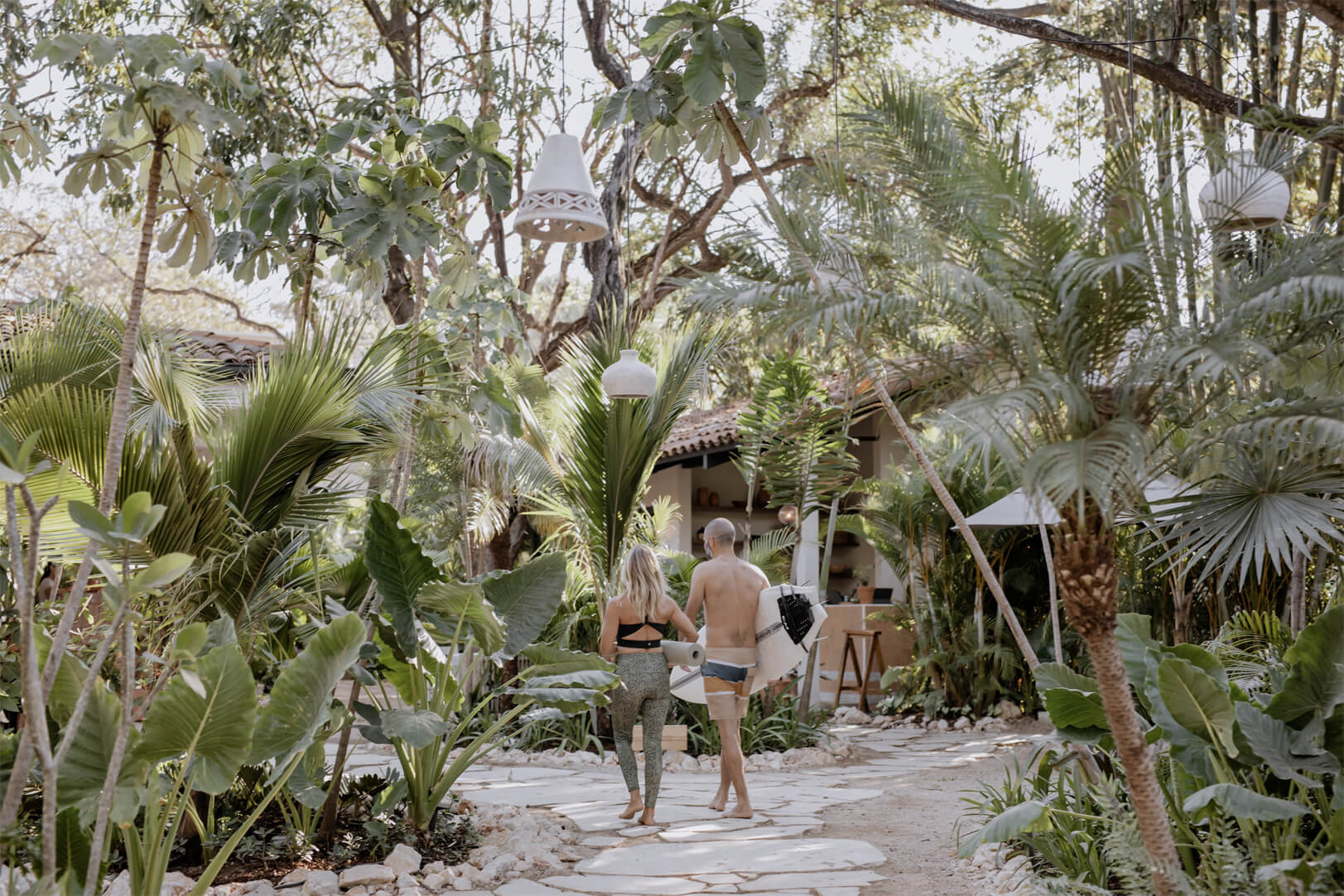
One of the most visible things about Nosara is what you don’t see. There are no high-rise hotels. No roads paved right up to the shoreline. Buildings are set back, kept low, and required to work around the trees rather than replace them.
This isn’t an accident. Nosara has some of the most protective zoning regulations in Costa Rica, and the community has consistently pushed back against development proposals that would change the character of the area. The result is a town where the jungle still comes down to the edges of things — where you can walk from your hotel to the beach through a canopy rather than a parking lot.
The Nosara Civic Association
The Nosara Civic Association (NCA) has been operating for decades, to help keep Nosara green by managing parks, roads, monitoring development, and working to enforce the building regulations that keep the area from being overbuilt.
It’s an unusual model, and it works largely because the community, both local Tico families and the expat population, has enough shared investment in preserving the place to keep showing up and doing the work.
Wildlife Corridors and the Animals You Actually See
The howler monkeys that wake you up at dawn aren’t just charming background noise. They’re an indicator species, meaning their presence means the tree canopy is intact enough to support a functioning ecosystem. The same goes for the coatis, the iguanas on the road, and the birds that move through in numbers that surprise first-time visitors.
Conservation groups in the area have worked to maintain and expand the wildlife corridors that allow animals to move between the protected areas around Nosara and the Ostional Wildlife Refuge to the north. Without those corridors, populations fragment and shrink. With them, the ecosystem stays connected.
Ostional and the Olive Ridley Turtles
A short drive up the coast, Ostional Wildlife Refuge is home to one of the most significant olive ridley sea turtle nesting events in the world. The arribadas, mass nesting events where thousands of turtles come ashore at once, happen regularly here, and the community-managed harvesting model that operates at Ostional is studied internationally as an example of how local people can be both the stewards and the beneficiaries of wildlife conservation.
Many visitors to Nosara make the trip north to witness a nesting event. It’s one of those experiences that’s difficult to describe accurately because the scale of it, and the strangeness and the weight of it, has to be seen.
The Ocean and What’s Being Done to Protect It
Playa Guiones is one of the cleanest beaches on Costa Rica’s Pacific coast, and that’s not a given. Regular organized beach cleanups happen throughout the year, driven by a combination of local volunteers, surf schools, hotels, and visiting groups who show up with bags and spend a morning working the shoreline. A few great non-profits include WCA Nosara, Costa Verdes and Bandera Azul.
There are also ongoing efforts to reduce single-use plastic in the Nosara ecosystem more broadly: in restaurants, in shops, and in the operations of the businesses that make up the local economy. Progress is uneven, as it tends to be, but the direction is clear.
What Sendero Does
We think about our role in this carefully. Sendero is part of the Nosara ecosystem, and we try to act like it.
That means sourcing food locally wherever we can, working with producers and suppliers who are based in the region rather than importing everything from San José or further. It means reducing single-use plastics across our operations and being deliberate about waste. It means supporting the organizations doing conservation work here, whether through direct partnerships or by making sure our guests know about them and have easy ways to get involved. It means building and designing in the most environmentally sustainable ways.
It also means being honest about the fact that tourism has an impact, and that the best version of hospitality in a place like Nosara is one that takes that seriously rather than ignoring it.
Why it Matters That You’re Here
There’s sometimes an assumption that the best thing a visitor can do for a fragile place is stay away. We don’t think that’s right.
Responsible tourism creates the economic conditions that make conservation viable long-term. When guests choose to stay at properties that care about this, eat at restaurants that source locally, and leave money in the hands of people who are genuinely invested in protecting Nosara, that’s what keeps the place intact.
You being here, done thoughtfully, is part of how this works.
Come and see it for yourself. Book your stay with us at Sendero today and enjoy the best of Costa Rica.